Startup Strategy
What is a Load Balancer? (And Why Your App Needs One!)
Your app just went viral. Suddenly, users flood in—and your server starts to buckle. What happens next could make or break your big moment.

Edie Woelfle
March 30, 2026
Your app just went viral. Suddenly, users flood in—and your server starts to buckle. What happens next could make or break your big moment.

Ever wonder why some websites crash when they get popular, but others keep running smoothly? The secret weapon is often something called a load balancer!
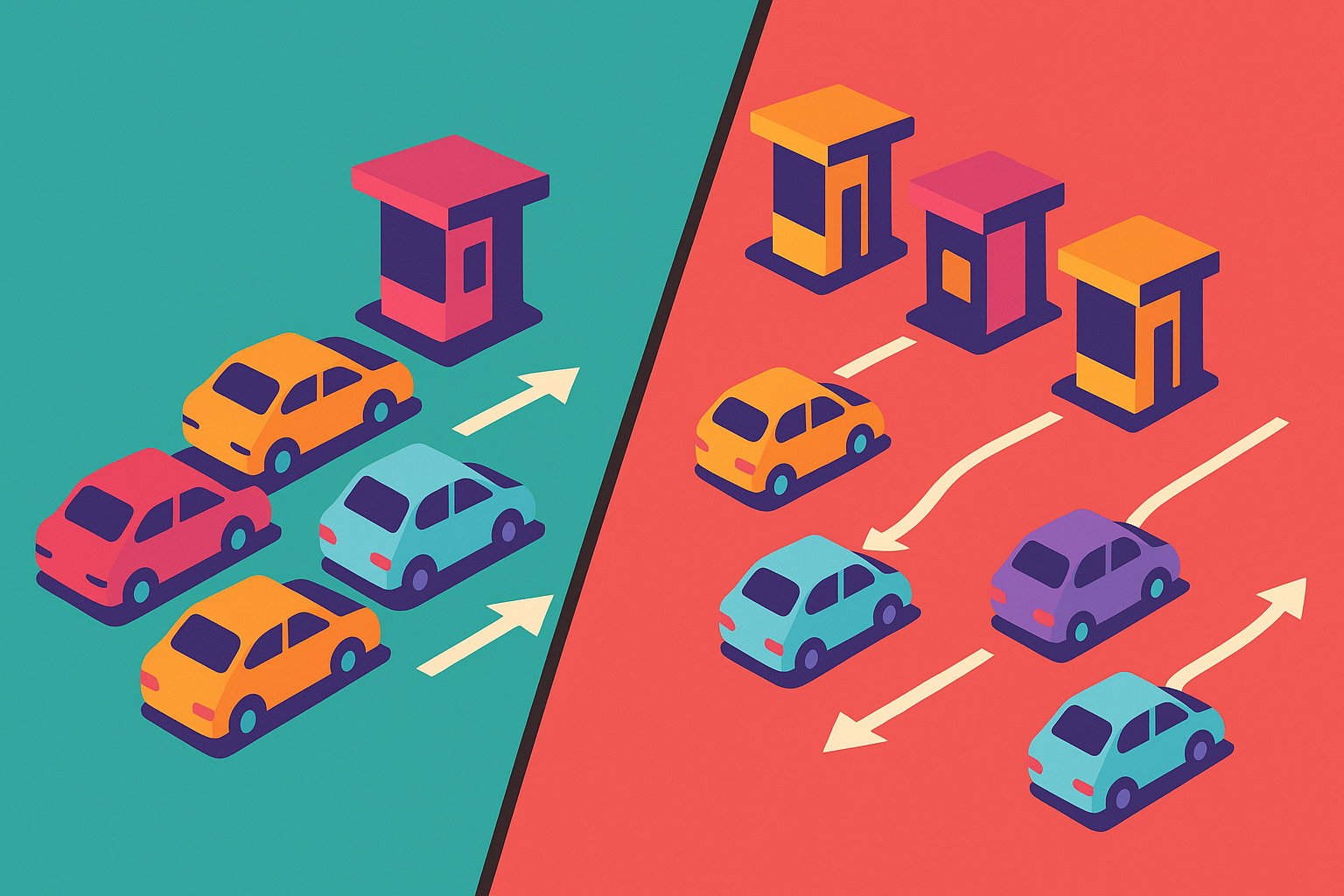
Think of a load balancer like a really smart traffic cop for your website. When lots of people try to visit your app at the same time, instead of sending everyone to the same "door" (which would cause a traffic jam), the load balancer spreads them out across multiple doors.
It's like having several checkout lines at a grocery store instead of just one. The load balancer makes sure no single line gets too long by directing customers to the shortest available line.
Let's say you built an amazing app and suddenly it goes viral. Without a load balancer, all those new users would overwhelm your single server, causing your app to slow down or crash completely. That's exactly what you DON'T want when you're finally getting the attention you've worked so hard for!
A load balancer prevents this nightmare scenario by:
When someone tries to access your app, they don't go directly to your server anymore. Instead, they first hit the load balancer, which then decides which of your available servers should handle that request.
The load balancer is constantly checking which servers are available and how busy they are. It's like having a host at a restaurant who can see which tables are open and which servers aren't too busy.
There are a few different ways load balancers decide where to send traffic:
Round Robin: Takes turns sending requests to each server, like dealing cards around a table.
Least Connections: Sends new requests to whichever server is currently handling the fewest people.
Geographic: Sends people to the server closest to where they live for faster loading.
If you're just starting out with your MVP, you probably don't need a load balancer yet. But you should start planning for one when:
Load balancers might sound complicated, but they're really just insurance for your app's success. They make sure that when good things happen (like lots of new users!), your tech stack can handle it without falling apart.
Think of it this way: you wouldn't open a popular restaurant with only one table, right? Load balancers give your app multiple "tables" so everyone gets served quickly and happily.
Ready to make sure your app can handle success? Get in touch with us at Keiboarder for all your software development and fractional CTO needs. We'll help you build an app that's ready for anything!