Process
When Process Feels Like Progress
Finding the sweet spot between chaos and bureaucracy

Edie Woelfle
January 6, 2026
Finding the sweet spot between chaos and bureaucracy

You’re in a meeting about planning a meeting to discuss when you’ll have another meeting. Meanwhile, your product launch keeps getting pushed back because nobody can agree on who’s supposed to do what.
Sound familiar? Welcome to the weird world where “being busy” gets confused with “making progress.”
Here’s the thing: every team is different. Some teams just need a light touch - a minimal process to keep everyone aligned and moving in the same direction. Other teams? Well, let’s just say they need a bit more... structure.
I’ve walked into situations where a simple daily check-in was enough to get everyone back on track. But I’ve also dealt with teams where I had to implement detailed tracking just to make sure they delivered what they promised. It all depends on trust.
Both extremes will kill your productivity faster than you can say “synergy.”
Some teams are naturally self-organizing. They communicate well, deliver what they promise, and keep you in the loop. With these teams, you can keep process minimal:
A simple backlog to keep priorities clear. Quick daily standups to stay aligned. Basic sprint planning to set realistic goals.
That’s it. Simple, lightweight, effective.
But then there are the other teams. The ones where the engineer says they’re “70% done” for the sixth month in a row. Where features get delivered but they don’t actually work. Where “it’ll be ready next week” becomes the team motto.
These teams get more process. Not because I enjoy paperwork, but because trust has to be rebuilt through transparency and accountability.
I’ve seen this exact scenario play out. A startup hired an engineer for two years and kept getting the “70% done” story. No process meant no way to verify progress. When they finally brought in someone to check the work, they discovered nothing usable had been built.
Two years. Down the drain. Because there was no accountability.
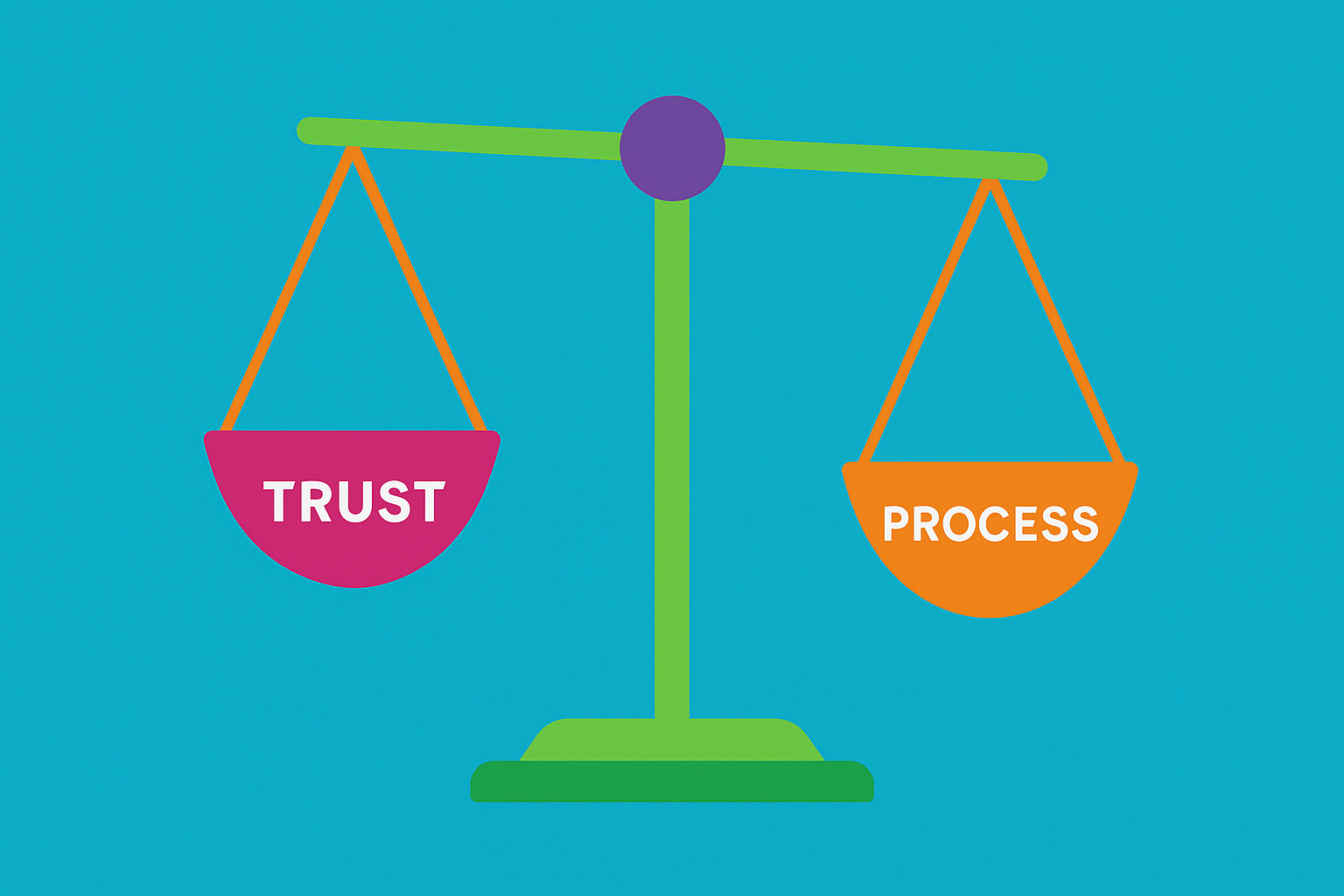
Here’s what most people don’t understand: process isn’t about control. It’s about trust.
I never walk into a situation wielding a sledgehammer. I start light - minimal process, maximum trust. But the moment that trust gets broken? That’s when things change.
And trust gets broken in creative ways:
Bold-faced lies about progress. Those wonderful conversations where I know they’re spinning me, they know they’re spinning me, and they know I know they’re spinning me - but we all just sit there pretending.
Telling me they’ve written user stories and “it’s all in the backlog“ - then I check after our meeting and there’s nothing there.
Pushing code to production using admin credentials they shouldn’t have, completely bypassing our Definition of Done.
Extending a two-week sprint into four weeks while I’m on vacation, hoping I won’t notice.
Turning off unit tests because they know the code won’t pass, then pushing it anyway.
Billing clients for “developers” who haven’t committed a single line of code to the repository in three months.
Yes, I’ve seen all of this. Multiple times. From multiple teams. And somehow, they always think I won’t catch them.
I do. Every time.
When trust breaks like this, the process gets very detailed very quickly. It’s not punishment - it’s protection.
The right amount of process depends entirely on your team. Start minimal and adjust based on results:
For High-Trust Teams:
Simple backlog management
Brief daily check-ins
Basic sprint goals
For Teams Rebuilding Trust:
Detailed Definition of Done
Regular demo sessions
Granular task tracking
More frequent check-ins
The key? Match the process to the team’s demonstrated reliability.
Process isn’t a one-size-fits-all solution. It’s a tool that should fit your team’s specific needs and trustworthiness. Start light, observe, and adjust accordingly.
And here’s something most people won’t tell you: if your team consistently resists reasonable process, that’s valuable information. Good developers understand that some structure makes their job easier and the product better.
The teams that fight basic accountability? They’re usually the ones with something to hide.
This week, start simple: create a basic list of what your team is working on using tools like Airtable or a simple Kanban board. Watch how your team responds to this minimal structure. Do they embrace it or resist it?
Their reaction will tell you everything you need to know about what level of process they actually need.
Coming Next Week: Process Management Recap.