Picture this: You're building your dream house, but you decide to skip the blueprints and model home phase. Instead, you tell the construction crew to figure it out as they go – while you're already living in the house. Every time they want to try a new electrical layout or test the plumbing, they have to do it while you're sleeping in the bedroom next door. One wrong wire, and your house burns down. One plumbing mistake, and you're flooded out.
That's exactly what happens when your app only has a production environment – the live version your customers use every day.
What Are Environments Anyway?
Think of environments as different stages of home construction that serve different purposes. Just like you wouldn't move into a house before testing the electricity and plumbing, your app needs separate stages for building, testing, and living.
Here's the simple breakdown:
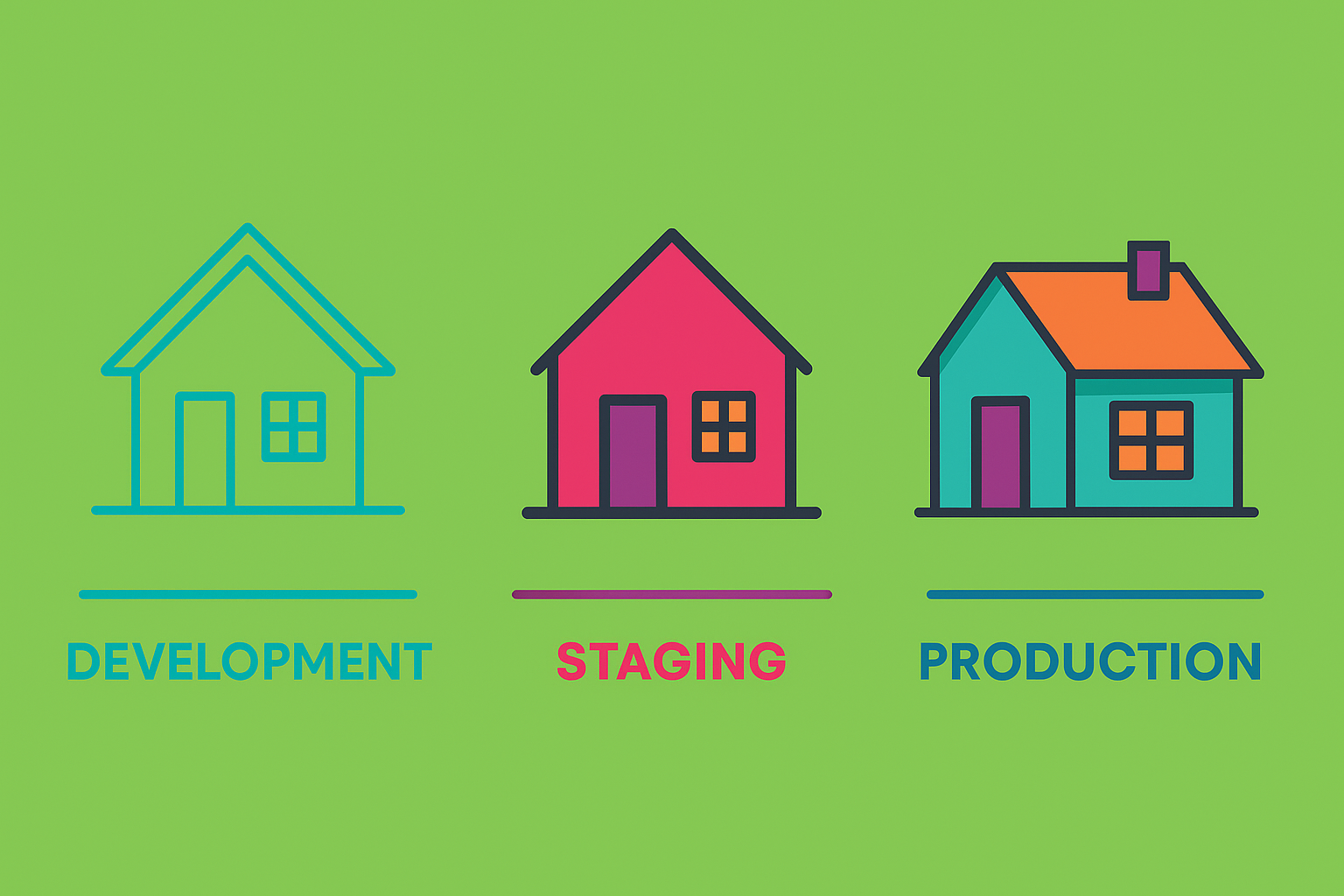
Production Environment: This is your finished, move-in-ready house where you actually live. Everything works perfectly and it's safe for residents.
Staging Environment: This is your fully-built model home where you test everything before moving in. It looks exactly like your real house but isn't where you actually sleep at night.
Development Environment: This is the architect's workshop and construction site where blueprints get drawn and walls get built. It's messy, loud, and constantly changing.
The Scary Risks of Building Without a Plan
When you skip the blueprint and model home phases, you're basically playing Russian roulette with your business. Here's what could go wrong:
Your Customer Data Gets Damaged
Without a safe place to test, developers have to make changes directly to your live house while people are inside. One wrong move with the electrical system and customer information could get wiped out completely. Imagine explaining to your residents why all their belongings disappeared or got moved to someone else's room.
Your House Collapses for Everyone
New rooms and features need testing before people can safely use them. Without a model home to test in, the first time anyone finds out if the new bathroom works is when your actual residents try to use it. A collapsed ceiling or flooded basement doesn't just inconvenience people – it makes the whole house unlivable.
You Violate Building Codes
Construction regulations require you to get permits and inspections before people can live in your house. Making changes without proper testing (because you don't have a model home) could get your house condemned. Housing violations can result in massive fines and forced evacuations.
Structural Problems Go Unnoticed
Safety inspections need to happen in a controlled environment. Without proper testing phases, dangerous structural issues might not get discovered until the house actually collapses. A building failure doesn't just cost money – people could get seriously hurt.
Your Construction Team Can't Work Effectively
Builders need space to experiment without fear. When they're scared to try new techniques (because they might damage the house people are living in), progress slows down. Your neighbors will finish their dream homes while your team is afraid to hammer a single nail.
Why Three Construction Phases Are Perfect (But Two Will Do)
The ideal home building process looks like this:
Development Phase (Architect's Workshop)
This is where your team designs and builds initial components. It's messy, plans change constantly, and that's perfectly fine. Think of it as the workshop where architects draw blueprints and test small prototypes.
Staging Phase (Model Home)
This is your final walkthrough before moving in. It's an exact replica of your real house, but with temporary furniture and utilities. Everything gets tested here before you actually move in. If the plumbing fails in the model home, no real residents get flooded.
Production Phase (Your Actual Home)
This is where you actually live – the finished, tested, safe house. Changes only happen here after they've been thoroughly tested in the model home first.
Can't afford three phases? Start with two: a model home and your real home. Your construction team can share the model home for both building and testing. It's not perfect, but it's infinitely better than building while people are trying to live there.
Real-World Examples of What Goes Wrong
We've seen startups lose thousands of dollars because a "quick repair" in their live app accidentally deleted customer accounts. We've watched companies scramble to explain to investors why their app was completely unusable for six hours because an untested update broke everything.
One client came to us after their previous developer had been making changes directly to their live app for months. When we inspected their system, we found security vulnerabilities that could have exposed every customer's personal information. The fix required shutting down their app for two days – during their busiest season.
The Bottom Line
Having multiple construction phases isn't just a "nice to have" – it's essential for protecting your business, your customers, and your reputation. The cost of building a model home is tiny compared to the cost of your actual house collapsing.
Yes, it means spending a bit more upfront. But it's like getting proper building permits and inspections. You hope you never need them, but you'll be grateful they're there when something goes wrong.
Ready to build your app foundation the right way? Get in touch with us for all your software development and technical infrastructure needs – we'll help you construct a solid foundation that protects your business and lets your team build without fear.