Process
What 'Done' Really Means
Why most teams are wasting money on "almost finished" features

Edie Woelfle
December 2, 2025
Why most teams are wasting money on "almost finished" features

Have you ever asked your developer how close a feature is to being done, and they said "70%"... three weeks ago? You're not alone.
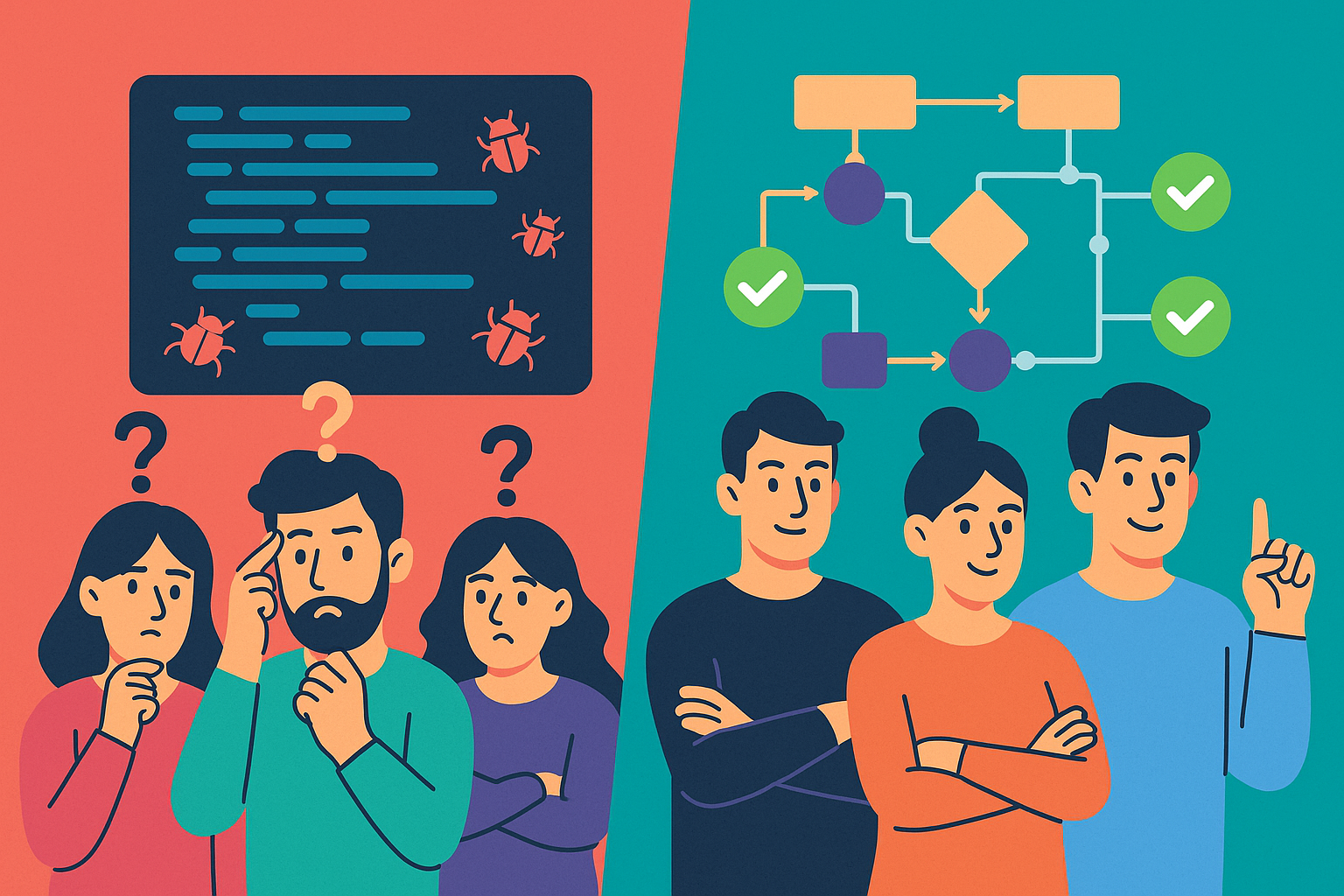
The biggest problem isn't that teams don't know how to build features. It's that everyone has a different idea of what "done" means. Your developer thinks it's done when the code works. Your tester thinks it's done when there are no bugs. You think it's done when customers can actually use it without calling for help.
Without a clear Definition of Done, you're playing an expensive game of telephone where everyone loses.
Picture this: You hired an offshore team that claimed to follow Agile methods. Six months later, your product technically works but breaks every time someone uses it. Your engineering budget went almost entirely to bug fixes instead of new features.
This exact scenario cost one of our clients over $100,000 before they realized what was missing: a simple, clear Definition of Done.
Here's what each team member thinks "done" means:
See the problem? Everyone's definition only covers their piece of the puzzle.
A proper Definition of Done touches every role on your team. Here's a simple version that actually works:
Technical Completion:
Quality Assurance:
Business Validation:
Deployment Ready:
Notice something? This definition involves everyone on your team, not just the people writing code.
Before you can define "done," you need to be crystal clear about what problem your product solves.
Exercise: Complete this sentence:
"Our product helps _______ accomplish _______ by _______."
Example: "Our product helps busy parents accomplish meal planning by automatically generating grocery lists based on their family's preferences."
Write down everyone who touches your product development:
Technical Roles:
Business Roles:
For each role, write how they currently define "done":
Developers think done means:
QA thinks done means:
You think done means:
Start simple with these categories and add 1-2 items for each:
Technical Completion:
Quality Assurance:
Business Validation:
User Ready:
Take your basic items and make them measurable:
Instead of: "Feature works" Write: "User can complete the signup process without errors"
Instead of: "Code is tested"
Write: "Unit tests cover at least 80% of new code"
Your specific DOD items:
A Definition of Done isn't about being fancy or following the latest project management trend. It's about saving money and preventing the frustration of features that are "almost done" forever.
Start with 5-7 simple, clear criteria that everyone on your team understands. You can always add more later, but don't let perfect be the enemy of good.
The companies that get this right spend their engineering budget on new features instead of fixing broken ones. Which would you rather be?
Want the complete guide? Get the full Definition of Done workbook with detailed examples, templates, and step-by-step implementation at payhip.com/b/WMgnJ.
Two-Week Sprints: The Magic Formula - Why this timeframe helps organizations measure real progress and how to set up sprints that actually work.
At Keiboarder, we help startups to Fortune 500 companies avoid costly software development mistakes with expert fractional CTO leadership, a clear roadmap, and a proven process to build and scale market-ready products. Get in touch with us, and let's build awesome things together! 🚀 Contact us